Sod installation delivers an instant, fully established lawn that would take months to grow from seed. Within two to three weeks of proper watering, sod roots into the underlying soil and becomes a permanent, usable lawn. Prestige Lawn Care provides professional sod installation throughout the Wichita metro, from Rose Hill to Andover, Derby, and beyond.
Unlike seeding, sod eliminates the waiting period, the risk of washout on slopes, and the weed competition that plagues newly seeded lawns in Kansas. Sod also provides immediate erosion control on freshly graded properties, making it the preferred choice for new construction and full lawn renovations.
Every sod installation we perform includes soil preparation and finish grading as part of the project. Laying sod on unprepared soil produces poor results. We grade the surface smooth, amend the soil to address the clay conditions common across the Wichita metro, and ensure proper drainage before a single piece of sod is placed.
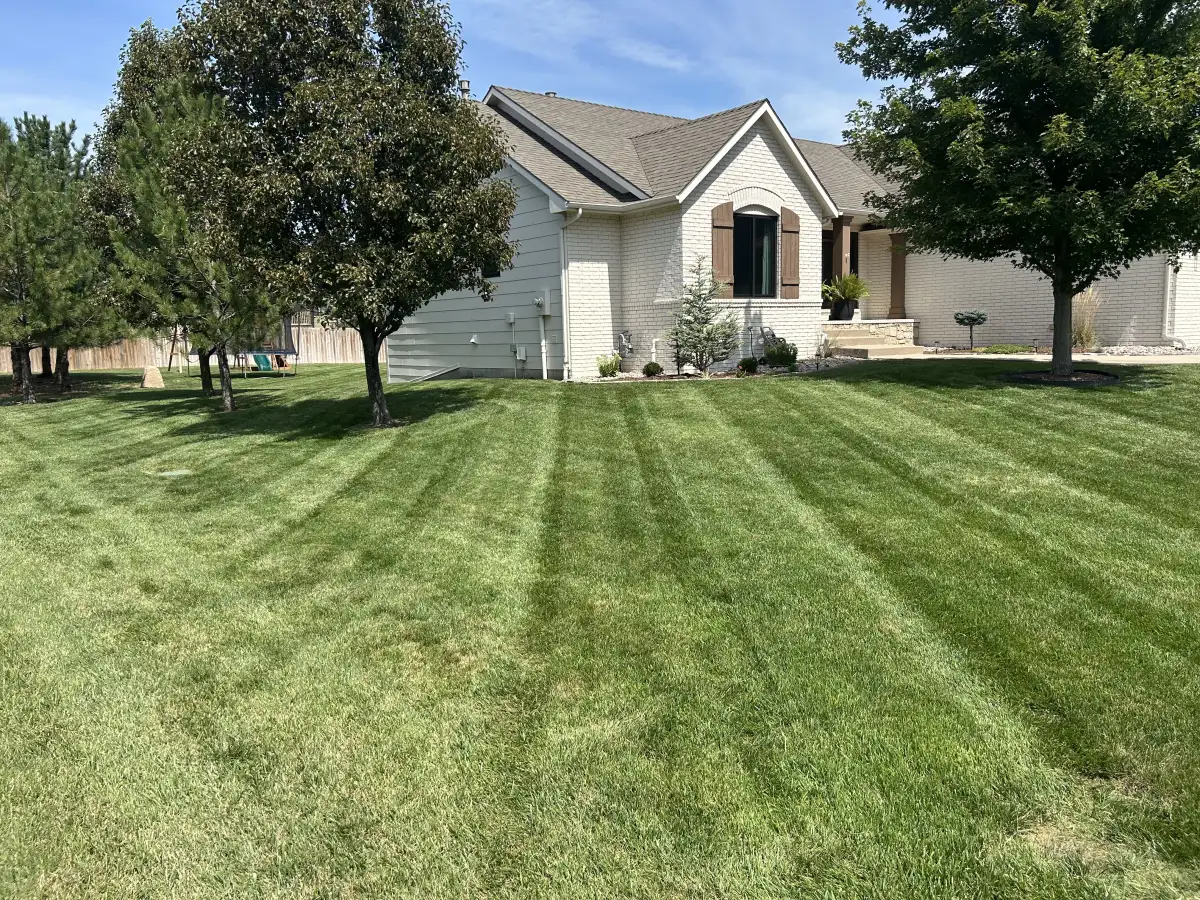
Best Sod Types for the Wichita, KS Climate
Kansas sits in the transition zone between cool-season and warm-season grasses, which means both types can grow here. Choosing the right variety for your property's sun exposure, intended use, and maintenance preferences is the most important decision in any sod project.
| Grass Type | Sun Requirement | Best For | Key Characteristics |
|---|---|---|---|
| Tall Fescue | Full sun to moderate shade | Most residential lawns | Stays green year-round. Deep roots handle Kansas drought. Most popular choice in the Wichita metro for its versatility and shade tolerance. |
| Bermuda | Full sun (8+ hours) | High-traffic areas, sports fields | Extremely durable and heat-tolerant. Recovers quickly from wear. Goes dormant (brown) in winter. Requires full sun. |
| Zoysia | Full sun to light shade | Premium residential lawns | Dense, carpet-like texture with excellent weed resistance once established. Lower maintenance long-term but slower to establish. |
| Kentucky Bluegrass | Full sun to light shade | Irrigated lawns wanting a manicured look | Rich dark green color and fine texture. Self-repairing via rhizomes. Needs consistent watering through Kansas summers. |
We recommend tall fescue for most residential properties in the Wichita area because of its year-round green color, shade tolerance, and ability to survive Kansas summers without heavy irrigation. For homeowners with full sun and a desire for a premium, low-maintenance lawn, zoysia is an excellent long-term investment.
Sod Installation Process
Professional sod installation is a multi-step process. Each step matters, and skipping any one leads to sod that fails to establish, develops brown patches, or settles unevenly.
Step 1: Soil Preparation
We remove existing vegetation, till the top 4-6 inches of soil, and incorporate compost to improve drainage in the Wichita area's clay-heavy soil. A soil test determines if pH adjustment with lime or sulfur is needed for optimal root development.
Step 2: Finish Grading
Using professional grading equipment, we create a smooth, even surface with proper slope for drainage. The finish grade sits approximately 1 inch below adjacent sidewalks and driveways to account for sod thickness.
Step 3: Laying Sod
Sod is laid the same day it is cut from the farm. We stagger joints like brickwork, push seams tight without overlapping, and use landscape staples on slopes to prevent sliding before roots establish.
Step 4: Rolling
After all sod is placed, we roll the entire area with a weighted lawn roller to eliminate air pockets between the sod and soil. Air pockets are the number one cause of brown patches in new sod installations.
Step 5: Initial Watering
We thoroughly soak the new sod immediately after rolling, applying enough water to penetrate through the sod and into the top 3-4 inches of underlying soil. You can check by lifting a corner to verify the soil beneath is wet.
Step 6: Care Instructions
You receive a detailed watering schedule specific to the grass type installed, the season, and your property's conditions. During the first two weeks, the sod needs daily watering. After roots establish, the schedule gradually reduces.
Best Time to Install Sod in Kansas
Timing affects sod establishment more than almost any other factor. Each grass type has an optimal installation window based on its growth pattern.
Tall Fescue & Bluegrass (Cool-Season)
Best installed from mid-September through November, when soil temperatures are warm enough for root growth but air temperatures have cooled. Spring installation (March through April) is the secondary window but carries higher risk because the grass faces summer heat before roots fully establish.
Bermuda & Zoysia (Warm-Season)
Best installed from late April through August, when soil temperatures are consistently above 65 degrees. Early summer installations give warm-season sod the longest runway to establish before fall dormancy.
Year-Round Installation
Sod can be installed any time the ground is not frozen in Kansas. Winter installations are viable for fescue, though establishment is slower. We advise clients on the trade-offs of off-season installation and adjust soil preparation and watering guidance accordingly.
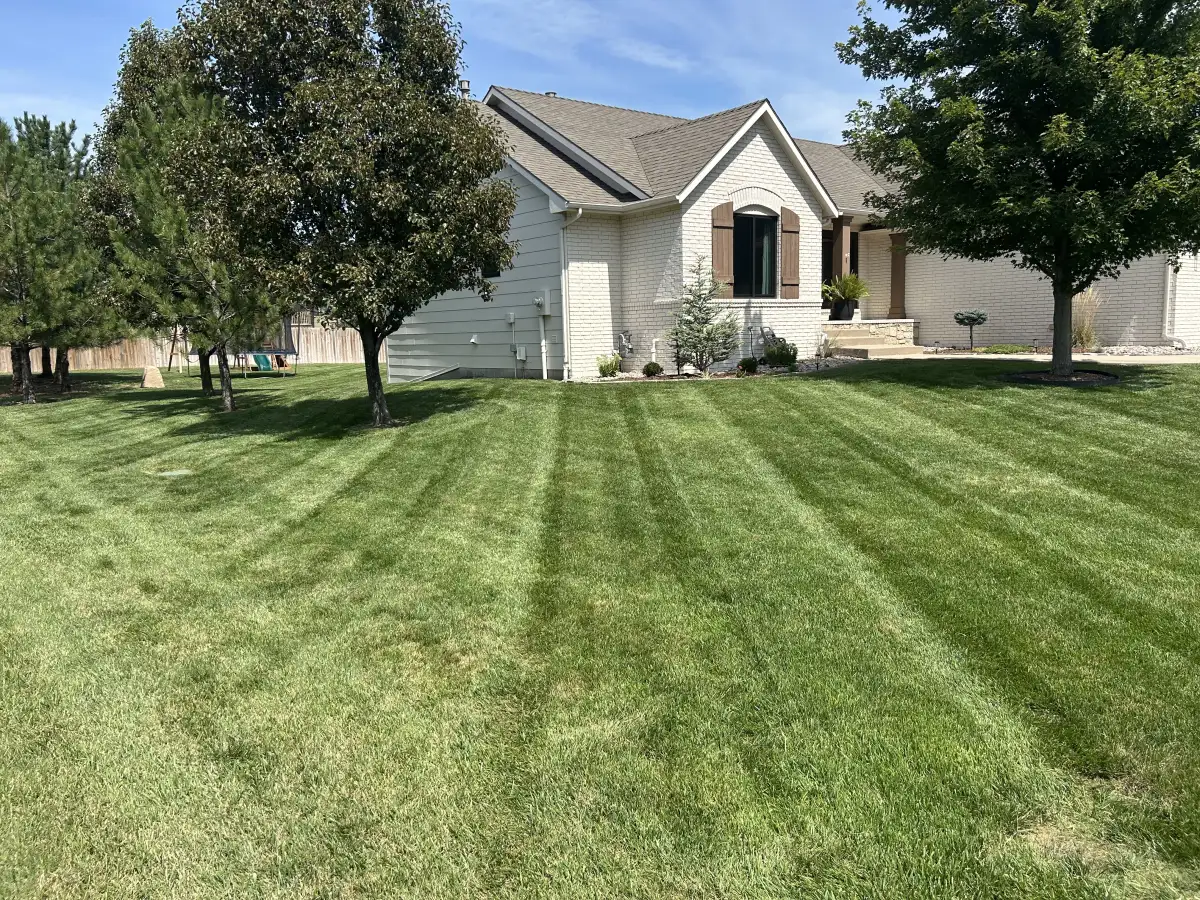
Post-Installation Watering Guide
The first 30 days after sod installation are critical. Proper watering makes or breaks the establishment process.
Week 1-2: Daily Watering
Water once daily (morning preferred) for 20-30 minutes per zone. Keep the sod and top 2 inches of soil consistently moist. Lift a corner periodically to check that the soil below is damp.
Week 3-4: Transition
Reduce watering to every other day but increase duration to 30-40 minutes. This encourages roots to grow deeper. By week three, sod should resist gentle tugging, indicating root attachment.
Week 5+: Normal Schedule
Transition to 1 inch of water per week applied in 2-3 deep sessions. Bermuda and zoysia can tolerate short dry periods. Fescue needs consistent moisture through Kansas summers.
First Mowing
Do not mow new sod until it has rooted firmly, typically 14-21 days after installation. Test by trying to lift a corner. If it resists, it is safe to mow. Set your mower to the highest setting for the first cut and never remove more than one-third of the blade height. Once established, consider our weekly mowing service to maintain your investment.
Sod Installation FAQ
Sod installation costs in the Wichita area depend on lawn size, grass type, and the amount of soil preparation required. A typical residential installation including soil prep and grading runs $1.25-$2.75 per square foot. A 5,000 square foot lawn ranges from approximately $6,250 to $13,750 depending on scope. Bermuda and fescue are the most affordable options; zoysia carries a premium due to higher sod cost. We provide detailed estimates after measuring your property and assessing soil conditions.
Tall fescue is the best all-around sod choice for most Kansas properties. It stays green year-round, tolerates the heat and cold swings of a Kansas climate, handles moderate shade, and develops deep roots that survive drought better than bluegrass. For full-sun properties with heavy foot traffic, bermuda is the most durable option. Zoysia provides a premium, low-maintenance lawn but goes dormant in winter. We assess your property's specific conditions and recommend the variety that will perform best.
Light foot traffic (walking across the lawn to check watering) is fine immediately, but avoid heavy or regular use for at least 2-3 weeks until roots have established. You can test root attachment by gently tugging on the sod. When it resists lifting, the roots have bonded with the underlying soil and the lawn can handle normal activity. Avoid placing heavy objects, hosting gatherings, or allowing pets to run repeatedly on new sod during the first month.
Sod is better when you need instant results, have slopes prone to erosion, need immediate erosion control, or want to avoid the 8-12 week establishment window that seeding requires. Seeding is more cost-effective for very large, flat areas with no time pressure. For most residential properties in the Wichita metro, sod delivers superior results because Kansas clay soil and unpredictable spring weather make seed establishment challenging. If your existing lawn is less than 50% healthy grass, sod replacement is more reliable than overseeding.
Related Services
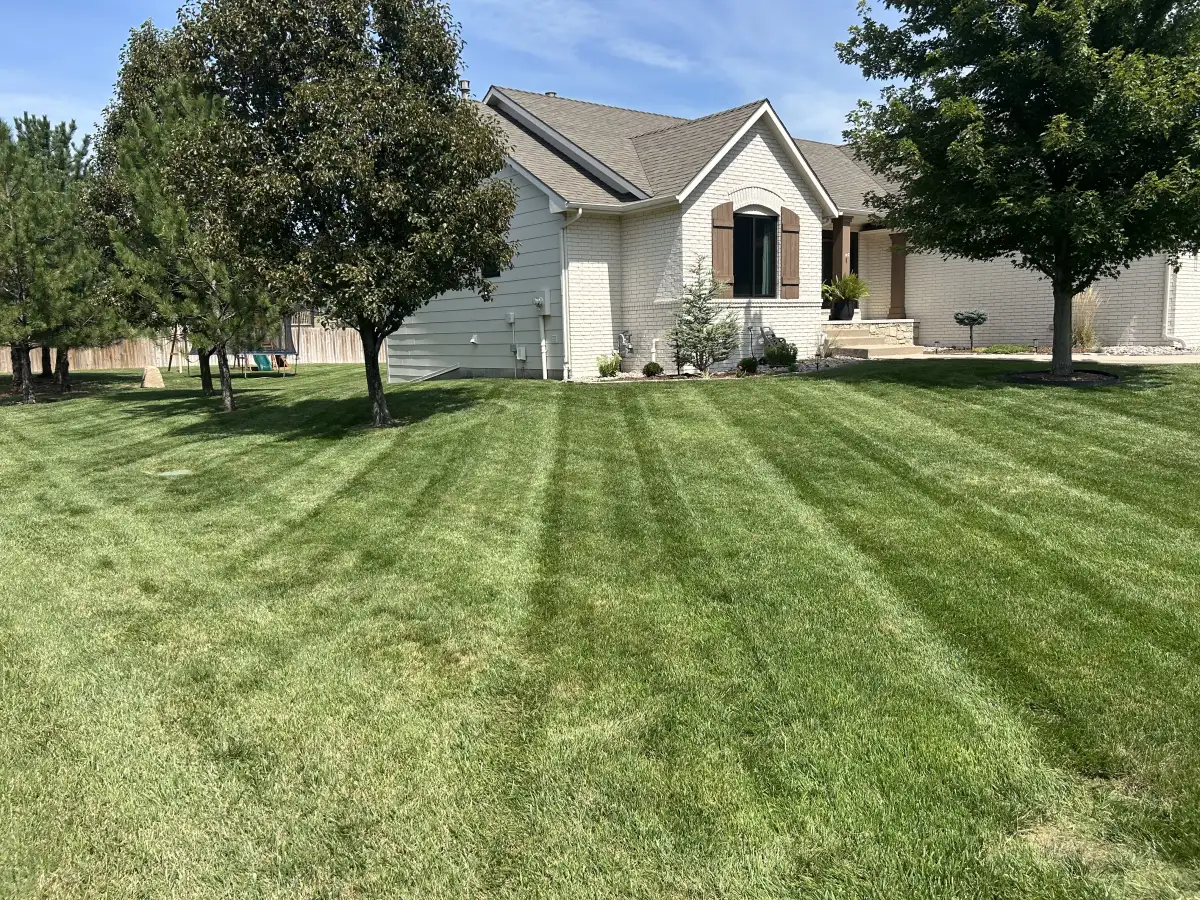
Aeration & Seeding
Thicken thin lawns without full replacement using core aeration and overseeding.
Learn More →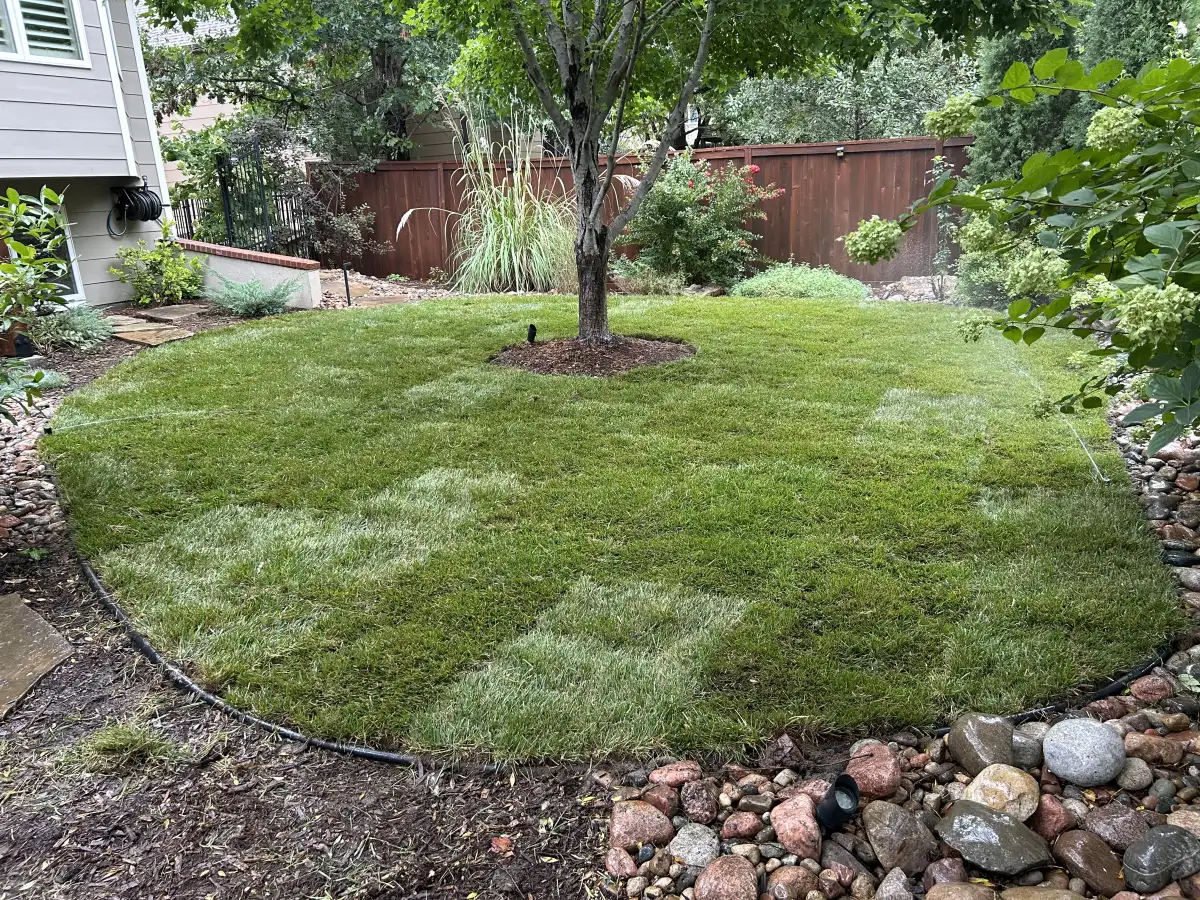
Landscape Design
Complete the transformation with plantings, beds, and hardscape features around your new lawn.
Learn More →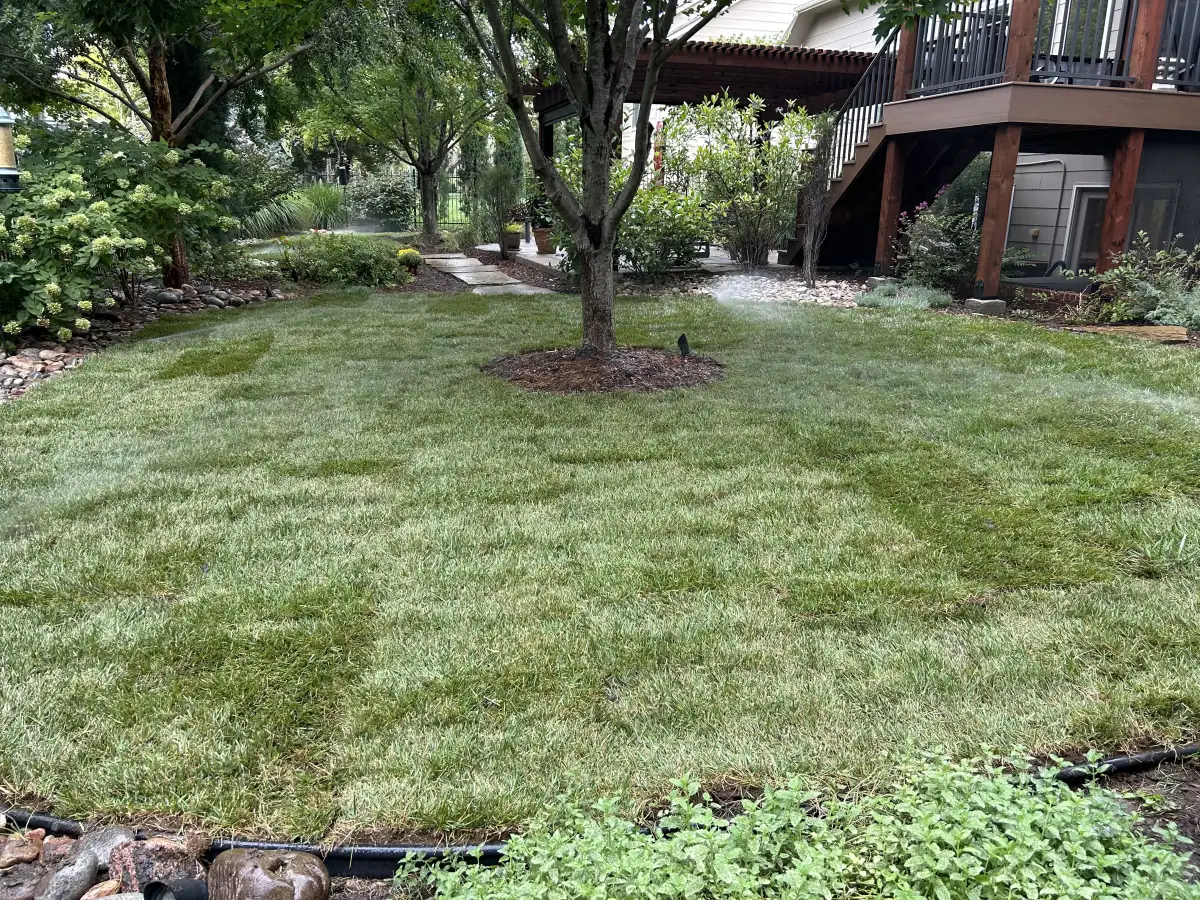
Irrigation & Sprinkler Repair
Ensure your new sod gets consistent, efficient watering with a properly tuned irrigation system.
Learn More →